
Decades of investing wisdom condensed into 7 charts.
Not eternal wisdom clichés. Promise.

Investing is full of rules that do not feel true until experience makes them expensive.
Hard data can make those rules visible before experience does.
Here are seven rules I wish I had learned sooner.
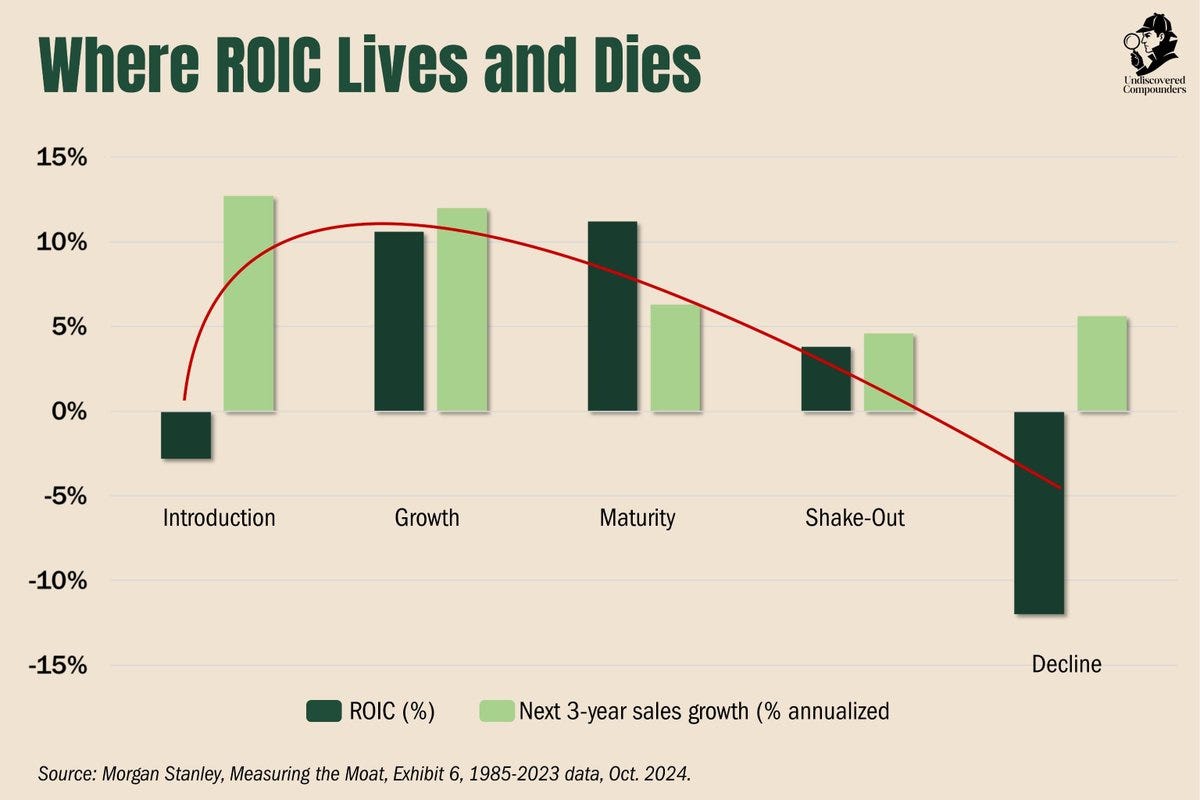
The Circle of Life
This is how companies are born, grow, and die.
A dying company may still post positive sales growth over the next three years, but only by continuing to destroy shareholder value.
Don’t trust growth.
Acrophobia Is a Costly Flaw in Investing
All-time highs are neither rare nor dangerous (in general):
On a monthly basis, the S&P 500 reaches a new all-time high in 31% of months.
Over the past 100 years, only 2.5% of those all-time highs were followed by a deep drawdown of more than 30%.
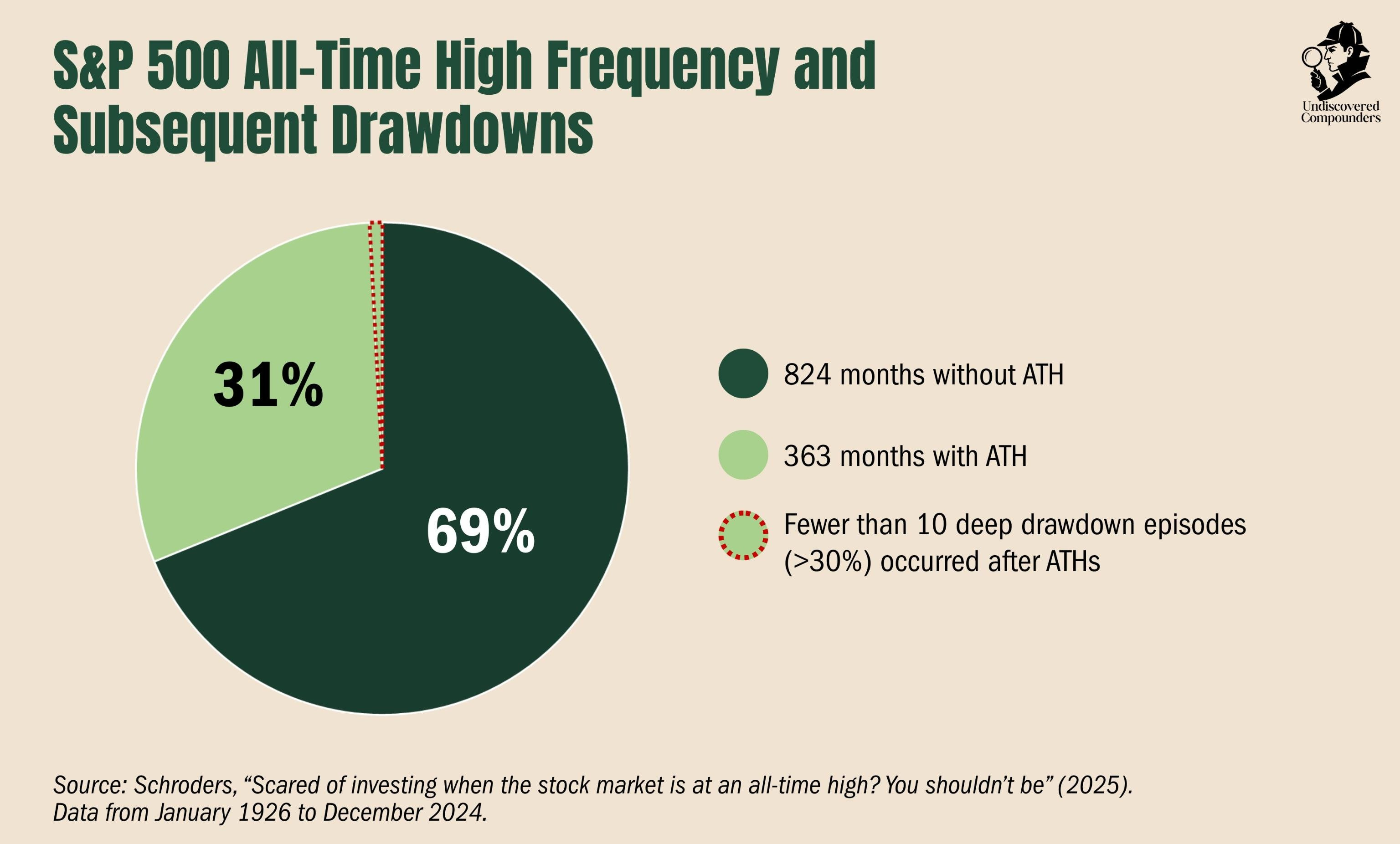
So yes, all-time highs rarely lead to disastrous outcomes. But what about the typical case?
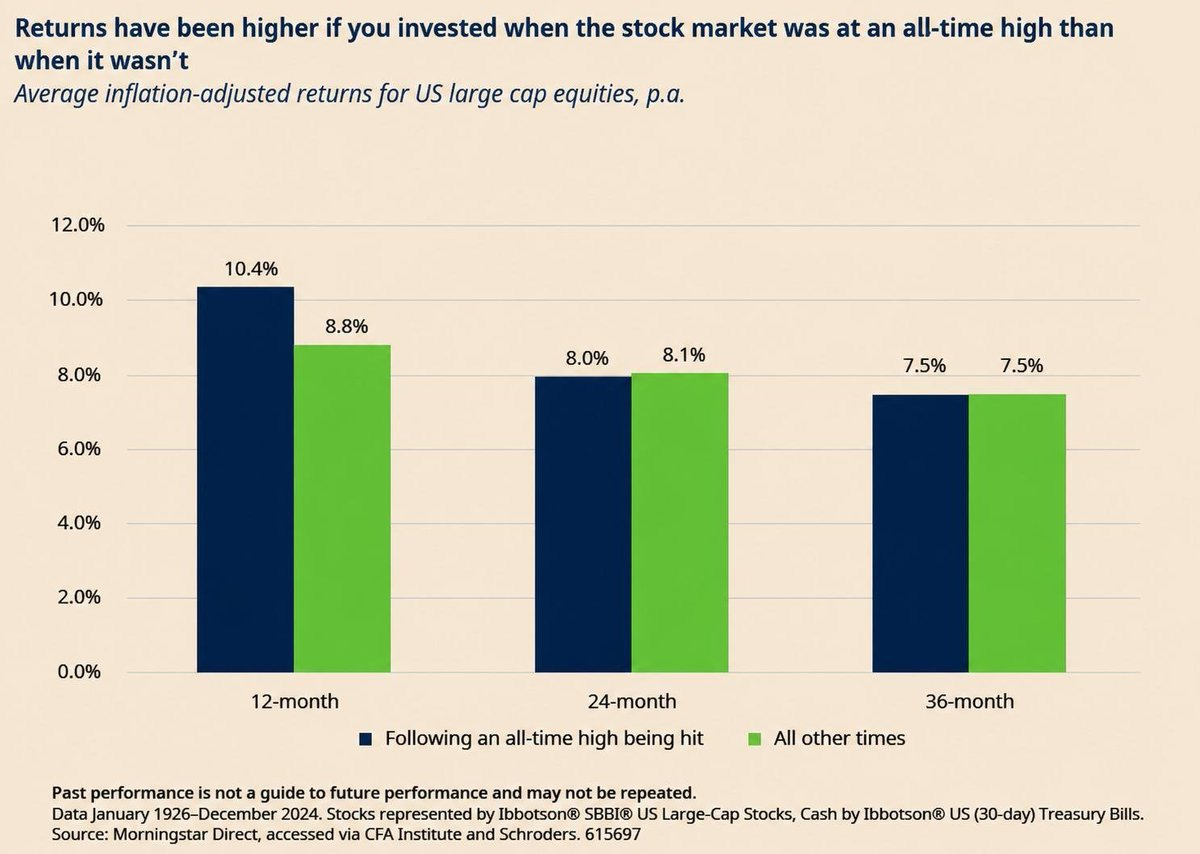
Simple: investing at an all-time high has historically delivered returns similar to those of investing at almost any other moment over the next 2 or 3 years, and slightly better over the next 12 months.
These data are a necessary antidote to one of investors’ most common fears: acrophobia.
Inverse-consumer strategy.
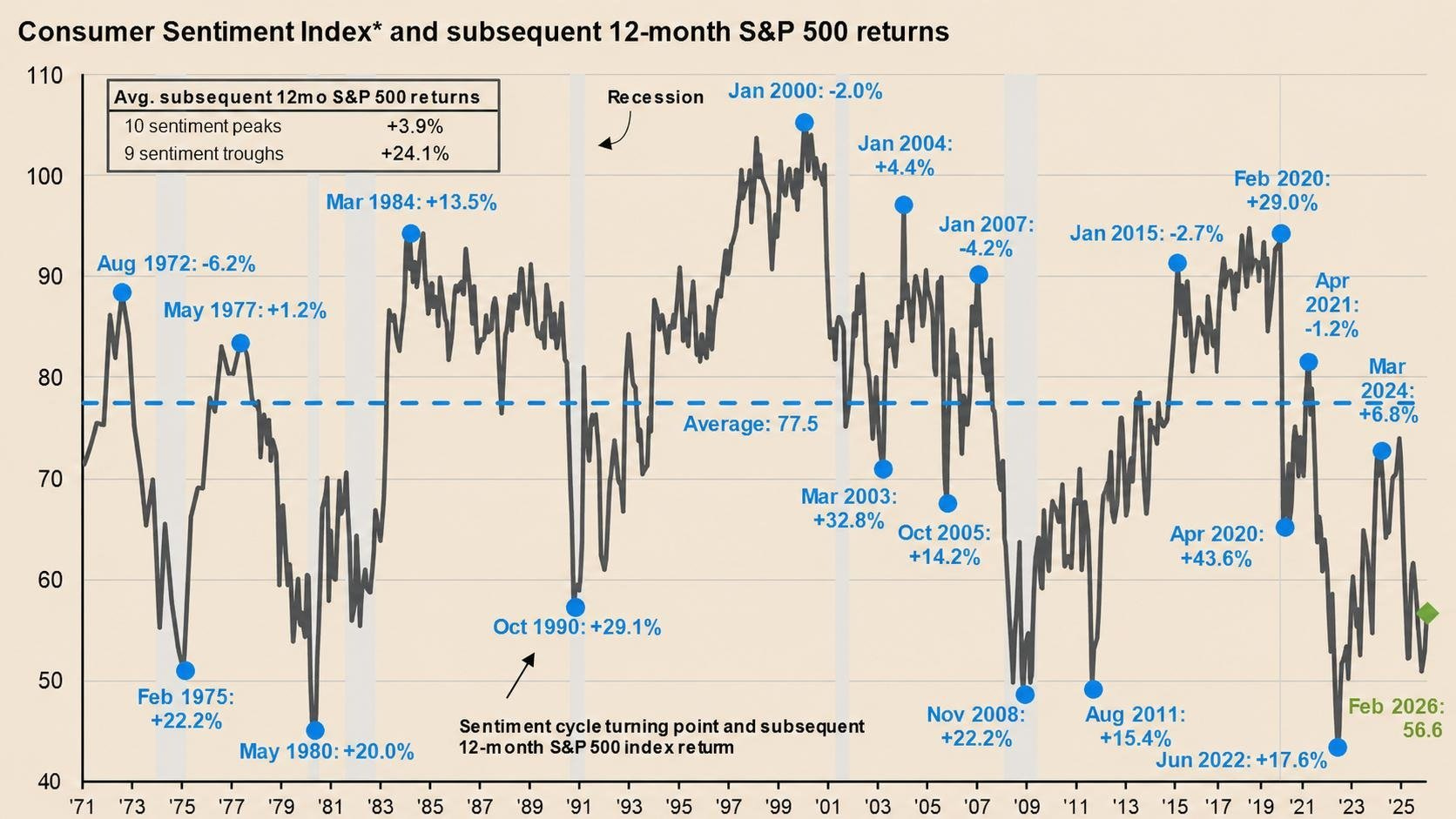
Trust the consumer to get it wrong. Over an investing lifetime:
Investing when consumer confidence is at a peak has led to an average 12-month return of 3.9%.
Investing when consumer confidence is at a trough has led to an average 12-month return of 24.1%.
When the world makes you hesitate, this is exactly the kind of chart that helps you press the trigger.
The Cycle of War
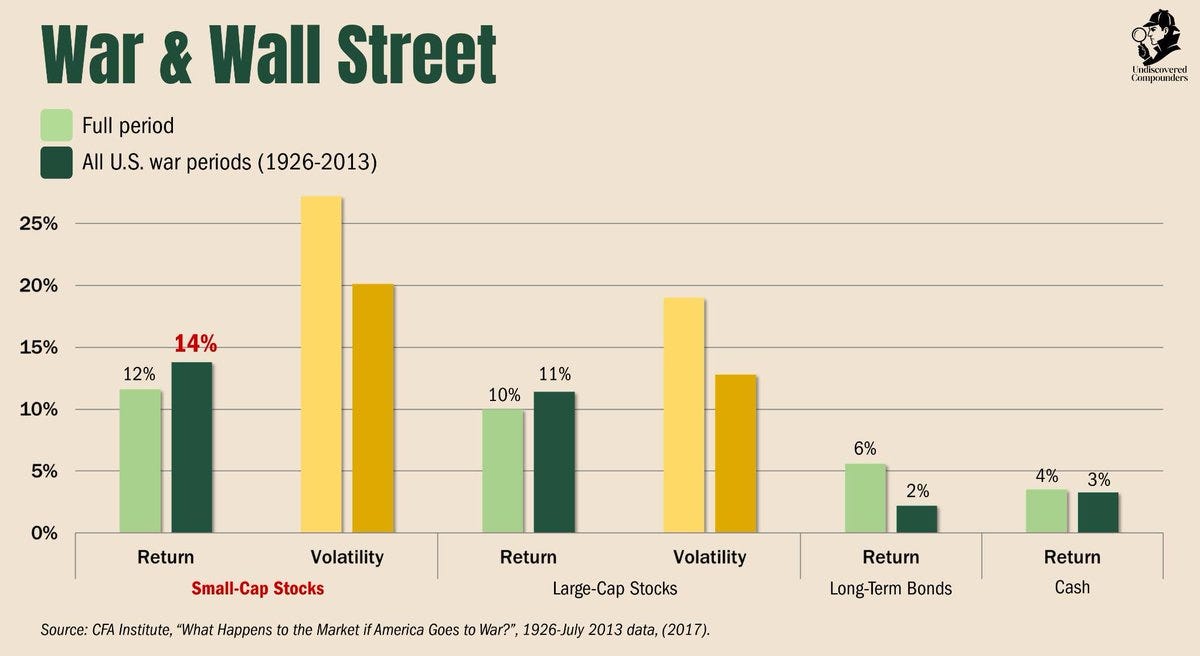
War increases uncertainty, but not necessarily risk.
Historically, war has tended to bring higher inflation, higher volatility, and higher returns.
The evidence is admittedly US-centric, which limits how far it can be generalized with confidence.
If you can withstand the volatility, war has historically come with higher raw returns.
Value Play or Value Trap
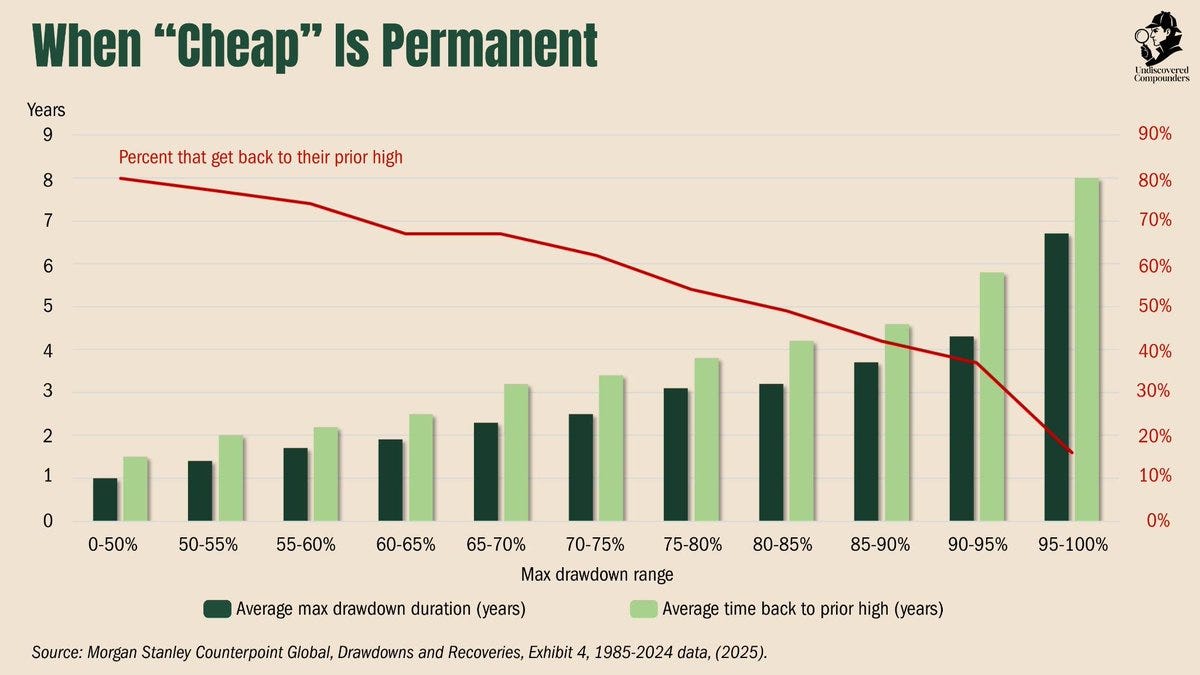
The deeper the drawdown, the longer it takes to reclaim the all-time high, and the lower the odds that it ever does.
No comforting truth here. Just statistics every investor should study before buying a stock that is down 50% or more.
One Simple Rule That Beat Buy & Hold
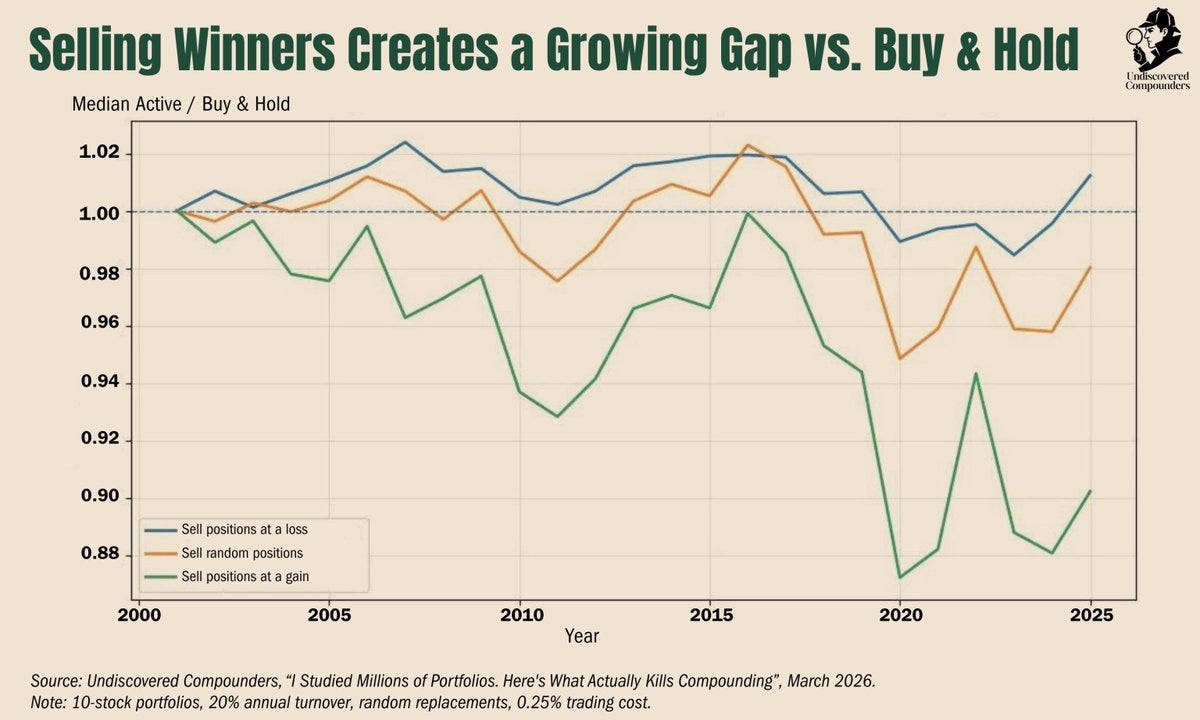
Build a portfolio, then repeat the same exercise every year for 25 years: sell 20% of your positions and replace them with randomly selected stocks.
But there is one twist. Each time, you either:
sell positions at random,
sell your best performers,
or sell your worst performers.
What happens next tells you almost everything about how returns are really built.
Selling your winners each year is the most reliable way to underperform buy and hold.
Selling your losers each year is the most reliable way to outperform buy and hold.
Best of all, this was tested on millions of simulated portfolios built from randomly selected S&P 500 stocks, and the result barely changes whether the portfolio holds 5 stocks or 40.
No hidden condition. No clever trick.
As so often in investing: simple, but not easy.
(Click here for a deep dive on the study)
“Even God Would Get Fired as an Active Investor”
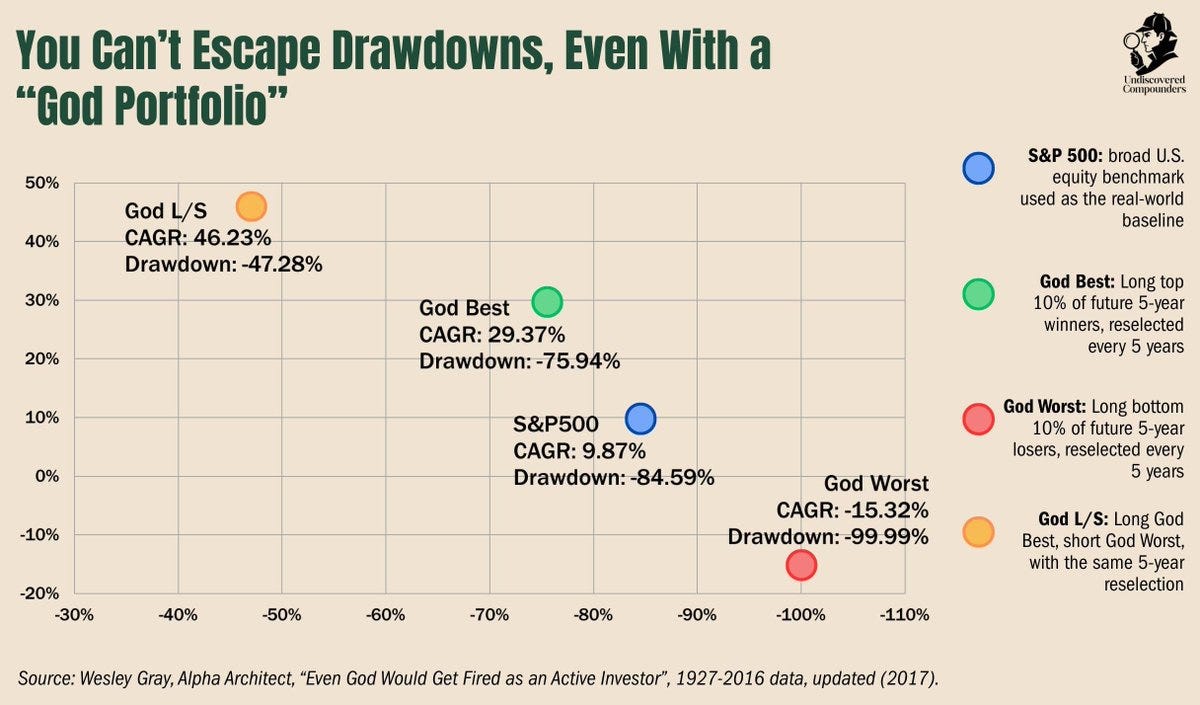
Imagine knowing exactly what the next 5 years will look like.
You buy the best stocks, short the worst, and rebuild the best portfolio every five years over a 90-year period.
Your worst drawdown? 47%.
And if you only go long the winners, the drawdown gets even worse: 76%.
Even with perfect foresight and superhuman returns, you still get cut in half at some point.
Volatility is not an exception. It is a constant. The choice is whether to prepare for it or be ruled by it.
(Click here for a deep dive on the study.)
None of these lessons is difficult to understand in hindsight.
What is difficult is recognizing them while fear, noise, and uncertainty are still in control.
If there is any edge in this piece, it is simply this: remembering what matters before the market forces you to.
Take care,
Flo

Interesting – but buying and holding isn't a strategy in and of itself, unless we create thesis invalidation conditions, right?
I, for example, think that once an investor creates these conditions, he shouldn't add or remove any more conditions so that he's not emotional – but I have an issue with Duolingo right now. Any advice?
Incredible piece